AGU premia un commentary di CNR-ISAC sul ruolo dei temporali estremi nella stratosfera

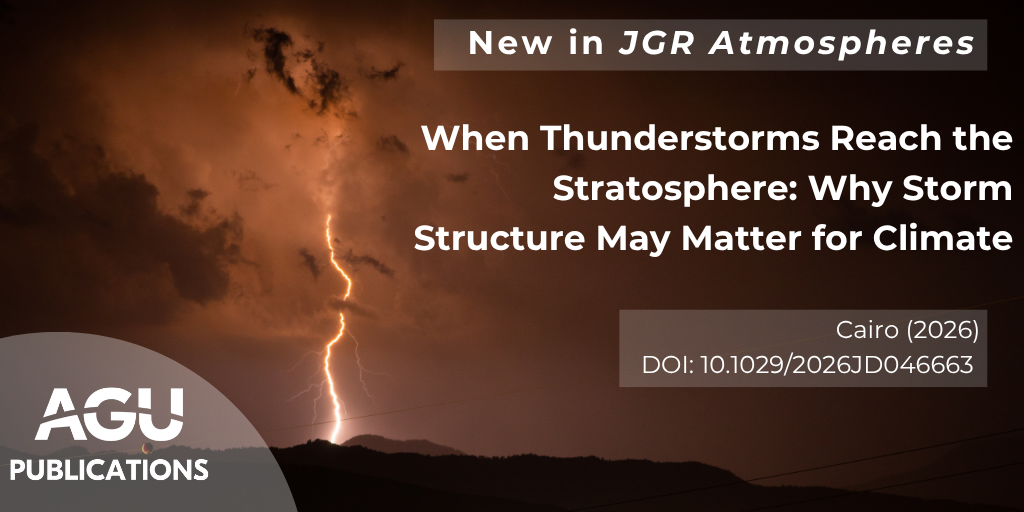
Il commentary When Thunderstorms Reach the Stratosphere: Why Storm Structure May Matter for Climate, pubblicato su invito su Journal of Geophysical Research: Atmospheres da Francesco Cairo, ricercatore del CNR-ISAC, è stato selezionato dall’Editorial Board della rivista per essere promosso sui canali social dell’American Geophysical Union.

La selezione riguarda meno del 2% degli articoli pubblicati da AGU e rappresenta un importante riconoscimento della rilevanza scientifica e comunicativa del lavoro.

Il contributo discute il ruolo dei temporali più intensi, capaci di superare la tropopausa e raggiungere la bassa stratosfera, nel trasporto verticale di vapore acqueo, aerosol e composti chimici.

Questi processi sono particolarmente importanti perché la stratosfera è una regione chiave per il bilancio radiativo terrestre, la chimica dell’ozono e la comprensione delle interazioni tra dinamica atmosferica e clima.

Il commentary mette in evidenza come non tutti i sistemi convettivi abbiano lo stesso impatto: la struttura della tempesta, la presenza di overshooting top, plumes sopra l’anvil e sistemi convettivi organizzati possono determinare percorsi ed effetti differenti nello scambio tra troposfera e stratosfera.

Il lavoro colloca questi risultati nel contesto delle osservazioni recenti e sottolinea la necessità di identificare quali classi di
sistemi convettivi siano più efficaci nell’influenzare la composizione della bassa stratosfera.

La promozione da parte di AGU contribuirà a dare visibilità internazionale a un tema centrale per la fisica dell’atmosfera: capire
come gli eventi convettivi estremi possano influenzare il clima, oggi e in un’atmosfera che cambia.
https://doi.org/10.1029/2026JD046663

MicroRad 2026: a L’Aquila la comunità internazionale della radiometria a microonde per l’osservazione della Terra

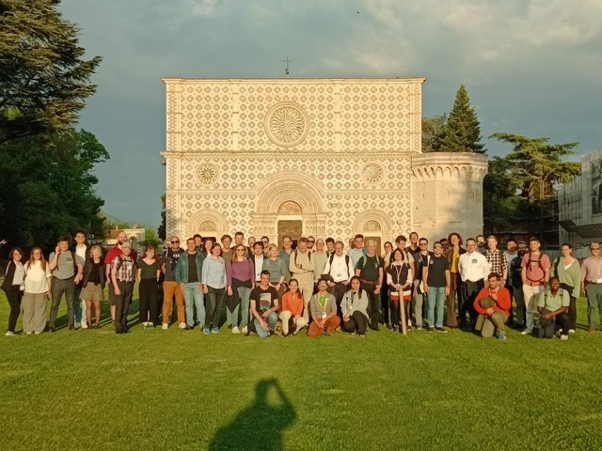
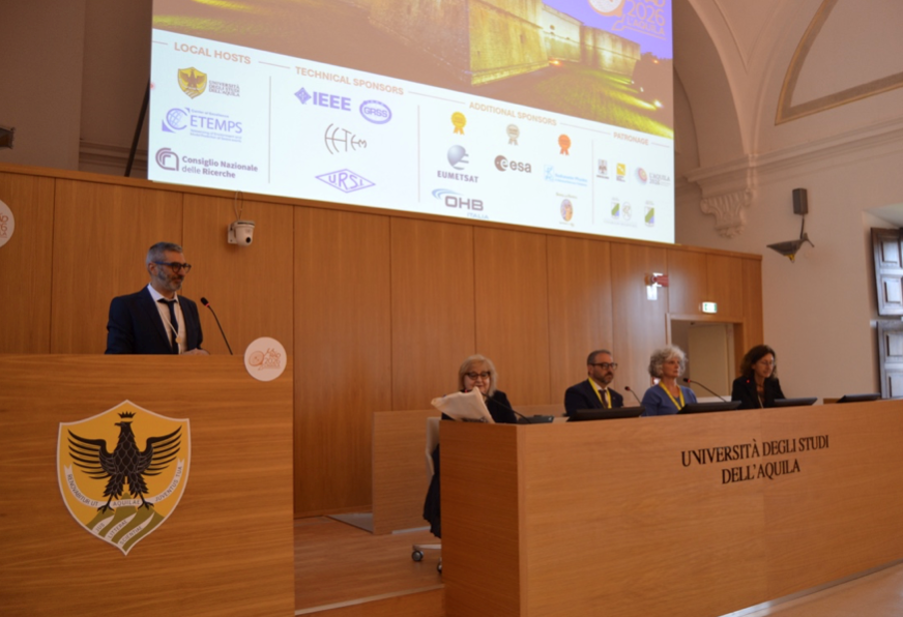
Si è conclusa il 30 aprile 2026 a L’Aquila la 18ª edizione di MicroRad – Specialist Meeting on Microwave Radiometry and Remote Sensing of the Environment, il principale forum internazionale dedicato alla radiometria a microonde applicata all’osservazione del sistema Terra. L’evento, ospitato presso il Centro Congressi “Luigi Zordan”, è stato co-organizzato dal CNR-Istituto di Metodologie per l’Analisi Ambientale (CNR-IMAA) e dal CNR-Istituto di Scienze dell’Atmosfera e del Clima (CNR-ISAC), in collaborazione con il CETEMPS dell’Università degli Studi dell’Aquila e con il supporto di importanti organizzazioni scientifiche internazionali.

Nata a Roma nel 1983, la conferenza MicroRad si svolge con cadenza biennale alternando sedi europee e statunitensi e rappresenta da oltre quarant’anni un punto di riferimento per la comunità scientifica impegnata nello sviluppo e nelle applicazioni delle tecniche radiometriche a microonde per il monitoraggio dell’atmosfera, degli oceani, della superficie terrestre, della criosfera e del clima.

L’edizione 2026 ha registrato la partecipazione di circa 150 ricercatrici e ricercatori provenienti da Europa, Nord America e Asia, in rappresentanza di università, centri di ricerca, servizi meteorologici e delle principali agenzie spaziali internazionali, tra cui NASA, ESA, EUMETSAT, NOAA, JAXA, CMA e CNES. Il programma scientifico ha affrontato temi di grande attualità, spaziando dagli sviluppi strumentali e metodologici della radiometria a microonde alle nuove applicazioni per l’osservazione della Terra, con particolare attenzione alle future missioni satellitari, all’assimilazione dei dati nei modelli atmosferici e climatici e all’impiego dell’intelligenza artificiale nell’elaborazione delle osservazioni radiometriche.

Particolarmente significativa è stata la presenza del CNR, che attraverso i propri istituti ha contribuito sia all’organizzazione dell’evento sia al programma scientifico, presentando risultati di ricerca e attività di sviluppo tecnologico nel campo del telerilevamento a microonde. La conferenza ha inoltre offerto un’importante occasione di confronto tra ricercatori affermati, giovani studiosi e rappresentanti delle agenzie spaziali, favorendo nuove collaborazioni scientifiche a livello internazionale.

Tra i momenti più significativi della manifestazione vi sono state le iniziative dedicate alla memoria del professor Frank Marzano, figura di riferimento nel settore del telerilevamento e già docente dell’Università La Sapienza di Roma e Direttore del CETEMPS, con la consegna del premio “Fiorino d’Oro” alla sua memoria , il premio IEEE GRSS “Frank Marzano” per le migliori tesi specialistiche e di dottorato, e il premio Gutta Aurea Marzano Award dalla fondazione “Per Aspera Ad Astra” a lui intitolata, dedicato a giovani ricercatori e ricercatrici distintisi nell’ambito del telerilevamento e della meteorologia da satellite. Nella sessione di chiusura sono stati consegnati i premi per le migliori presentazioni orali e poster, dedicati alla memoria di Walter Di Nicolantonio, ingegnere di OHB Italia che faceva parte del team di sviluppo del Microwave Imager della missione europea MetOp Second Generation e della missione CIMR del programma Copernicus.

Il successo di partecipazione e la qualità dei contributi presentati hanno confermato il ruolo di MicroRad come uno dei principali appuntamenti internazionali per la comunità scientifica che opera nel settore della radiometria a microonde e dell’osservazione della Terra, consolidando ulteriormente la visibilità del CNR e delle istituzioni scientifiche italiane in un ambito strategico per il monitoraggio ambientale e climatico del pianeta.

Per maggiori informazioni sull’evento è disponibile il sito ufficiale: MicroRad 2026.

ZONE UMIDE SOTTO PRESSIONE: LA LAGUNA DI SANTA GILLA TRA EVENTI ESTREMI E IMPATTI LOCALI

Workshop Progetto HEAT

Il 15 maggio u.s. nell’Ambito del progetto HEAT (https://dta.cnr.it/project/heat/), di cui è PI Antonio Olita, ricercatore CNR-ISAC sede di Cagliari, si è svolto il workshop alla presenza di Ricercatori, politici, tecnici e operatori del settore pesca.

Nel corso del workshop sono state evidenziate le pressioni meteo-climatiche a cui è soggetta la Laguna di Santa Gilla, e a cui sono soggette, per estensione, tutte le lagune costiere mediterranee, nonché i rischi e gli impatti ad esse correlate.

Gli interventi della parte politica hanno dimostrato una ormai matura consapevolezza della problematica, mentre, da parte del mondo della ricerca, è emersa la necessità di un potenziamento dei programmi di studio e monitoraggio degli ambienti lagunari, anche allo scopo di fornire informazioni utili alle strategie di mitigazione e adattamento che gli enti locali programmano di mettere in atto ANCHE in questi ambienti.

Il workshop è terminato con una tavola rotonda che ha visto partecipi tutte le parti chiamate in causa per una proficua gestione e valorizzazione dell’ambiente lagunare, con l’intento, da parte dei ricercatori di produrre un documento di sintesi da sottoporre a tecnici e politici.

L’incontro ha visto come protagonisti i ricercatori, partner del progetto HEAT, di 4 Istituti CNR (ISAC, IAS, IBE, IRCRES) appartenenti a 3 differenti dipartimenti (DSSTTA, DiSBA, DSU). Il progetto Heat, vincitore dell’avviso CNR-DSSTTA STUPIRE, ha come obiettivo principale lo studio delle ondate di calore atmosferiche e marine su operatori del settore, economia e sul bioma nell’ambiente della Laguna di Santa Gilla (Cagliari).

Da sinistra: Fabio Manca, giornalista di Sardiniapost moderatore; Prof. Antonio Pusceddu, Università degli studi di Cagliari; Antonio Olita, ISAC-CNR, PI del Progetto Heat; Luisa Giua Marassi, Assessora all’Ambiente, Comune di Cagliari; Francesco Agus, Assessore dell’Agricoltura, Regione Autonoma della Sardegna; Prof. Piero Addis, Università degli Studi di Cagliari: Dr. Paolo Mossone, Direttore della Fondazione IMC (International Marine Centre)

Julian C. R. Hunt passed away on 20 April

He was a theoretician in fluid mechanics, never forgetting the practical applications, in a seamless path from nature to theory to the real world.

He had long-lasting interactions with people in our changing-name Institute, and in the dialogue between Francesco Tampieri and Silvia Trini Castelli some particular facets appear.

STC: Francesco, Julian was a scientific guide and a friend for you, wasn’t he?

FT: Yes. I began working with Julian at the beginning of the eighties. That time he was Fellow of the Trinity College in Cambridge, and he introduced me in DAMTP (Dept of Applied Math and Theoretical Physics): his first gift to me was the understanding that the turbulence lies with full merit under the mantle of theoretical physics, very useful in those years to live in the Bologna University Physics environment.

And what about you, Silvia?

STC: I met him the first time when I was a PhD student, at the “EUROMECH COLLOQUIUM on Atmospheric Turbulence and Dispersion in Complex Terrain”, which you organised in Bologna in September 1995. I was thrilled and honoured at the same time, for his presence in the audience, considering it was my first presentation at a congress… and knowing how severe his questions could be! He was friendly to us, young researchers, and gave us a fundamental lesson: before starting your own study, dig into the past literature, spend all the time needed and learn from it. I am not sure I have been able to comply with it, but I still keep it in my mind anytime I am interested in a new topic.

FT: about talks and conferences, it is worth remembering his transparencies (a geological era ago): so often Julian added in real time a sketch, an equation (or better, just a term of an equation, everyone shall imagine the leftover): every transparency a record of his deep and complex thinking.

Silvia, tell me your feelings about Julian’s lectures.

STC: I remember well his talks at conferences, and his hand-made transparencies dense with formulas and figures, which clearly showed his genius, sometimes making our understanding hard… but always pleasant!

FT: there was a story about Julian, and I can’t rule out that it was used to disapprove his way of reasoning: in the morning, during a briefing about some data, Julian formulates a theoretical interpretation; further data are presented, they disagree with the theory, and in the afternoon Julian presents a novel theoretical interpretation.  Far from being a rough and approximate approach, this story teaches me that a true scientist must face the Nature, any theoretical model may have bugs, and to explain the world you must be ready to supersede your previous beliefs.

He synthesised this way of working with a “very colonial (his words) proverb”: slowly slowly get the monkey. He was born in India, yes.

Getting to the core of medicanes: ISAC’s contribution to ESA research

Medicanes—Mediterranean cyclones with characteristics similar to tropical hurricanes—represent one of the main meteorological threats in the Mediterranean basin, capable of producing intense rainfall, strong winds, and severe impacts on coastal areas. The medicane Jolina recently landed in Libya, bringing extreme weather conditions but also providing scientists with a crucial case study.

To improve the understanding of these phenomena, the European Space Agency (ESA) has launched new Earth observation research activities, in which a leading role is played by the Institute of Atmospheric Sciences and Climate (ISAC) of the National Research Council of Italy. ISAC researchers contribute to the study of the internal structure of medicanes and the physical processes governing their formation and evolution, integrating satellite data with advanced numerical modelling (Medicanes Project https://medicanes.isac.cnr.it/).

In particular, data from ESA satellites—such as those from the Sentinel-1 mission—make it possible to observe sea surface wind fields in great detail and to analyse key storm features, including the cyclone eye and convective bands. ISAC uses this information to improve the representation of medicanes in atmospheric models and to better interpret their fine-scale dynamics.

ISAC’s contribution is part of an integrated approach combining satellite observations, data assimilation techniques, and high-resolution simulations. This helps overcome the scarcity of direct measurements over open sea and provides a more comprehensive view of these systems, which, although generally smaller and shorter-lived than tropical hurricanes, can reach high levels of organisation and intensity.

The research activities of the MEDICANES project consortium, coordinated by ISAC and with the participation of ISMAR, aim to enhance forecasting and monitoring capabilities for medicanes, with direct implications for early warning systems and risk management. In the context of climate change and increasing exposure of coastal areas, these studies represent a key contribution to strengthening the resilience of Mediterranean regions.

https://www.esa.int/Applications/Observing_the_Earth/FutureEO

The CNR is an advanced partner of GreenHer, a Center of Excellence for Sustainable Heritage Science.

The National Research Council (CNR) is participating as an Advanced Partner in GREENHER, the new Center of Excellence dedicated to developing an innovative and sustainable approach to cultural heritage science. GreenHer is one of 12 projects selected in the competitive European “Teaming for Excellence” call. The initiative aims to integrate scientific, technological, and humanistic skills to systematically address the challenges posed by climate change and the ecological transition to the conservation and enhancement of cultural heritage.

GreenHer was established to promote interdisciplinary research, foster technology transfer, and develop advanced solutions for the sustainable protection of cultural heritage, while contributing to the training of new highly qualified professionals. The Center, established at the University of Ljubljana (UL, project coordinator), also aims to strengthen research infrastructures and collaboration between public bodies, universities, and stakeholders, both nationally and internationally.

CNR and UCL (University College London) will act as “advanced partners,” conducting mentoring, training, and support activities, as well as research, and jointly developing new partnerships and policies with Slovenian institutions.

CNR will contribute through the involvement of three institutes—the Institute of Cultural Heritage Sciences (ISPC), Institute of Atmospheric and Climate Sciences (ISAC) and the Institute for Polymers, Composites, and Biomaterials (IPBC) — with complementary expertise, ranging from heritage sciences, environmental and climate sciences, diagnostics, materials, digital technologies, and modeling.

CNR-ISAC will contribute to the development of GreenHer’s activities thanks to its international experience in assessing the impacts and risks on cultural and natural heritage induced by pollution and climate change, including extreme events. The primary objective is to advance knowledge in the analysis and quantification of impacts through the development of vulnerability indicators and damage function models, and to support the definition of mitigation, adaptation, and prevention measures and strategies.

ISAC’s participation strengthens GreenHer’s interdisciplinary approach, highlighting how climate sciences are increasingly central to heritage protection, especially in a context of growing exposure to extreme events and environmental pressures.

The project’s kick-off meeting was held at the Ljubljana City Museum.

The CNR press release for the launch of GreenHer is available at this link: https://www.cnr.it/it/news/14247/il-cnr-e-advanced-partner-di-greenher-centro-di-eccellenza-per-una-scienza-del-patrimonio-sostenibile

The official press release is available at this link: https://greenher.uni-lj.si/2026/02/23/greenher-launches-operations-and-puts-slovenia-at-the-forefront-of-european-heritage-science/

Air Quality Monitoring at the Rome Marathon: The Contribution of the BAQUNIN Project

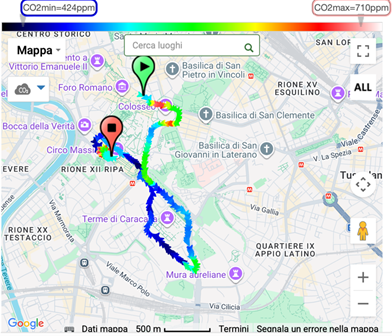
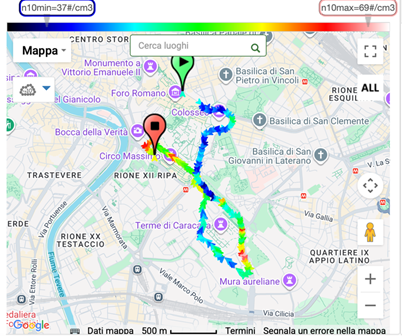
On Saturday, March 21, 2026, during the Rome Marathon, the ISAC team — part of the Boundary Layer Air Quality-analysis Using Network of INstruments (BAQUNIN) project, funded by ESA and EUMETSAT — carried out an air quality monitoring activity in the heart of the city

Using wearable meteorological and air quality sensors placed on the arms of Monica (ISAC), Nicola, Francesco, and Lorenzo (SERCO), and with the support of Sapienza University for sensor setup and data acquisition, we collected data along the 5 km “stracittadina” route between the Colosseum and Circus Maximus.

Several parameters were monitored along the route, including particulate matter (PM) and CO₂.

The activity continues with a more in-depth analysis, also supported by fixed sensors deployed along the route on Sunday, March 22, 2026, during the competitive marathon.

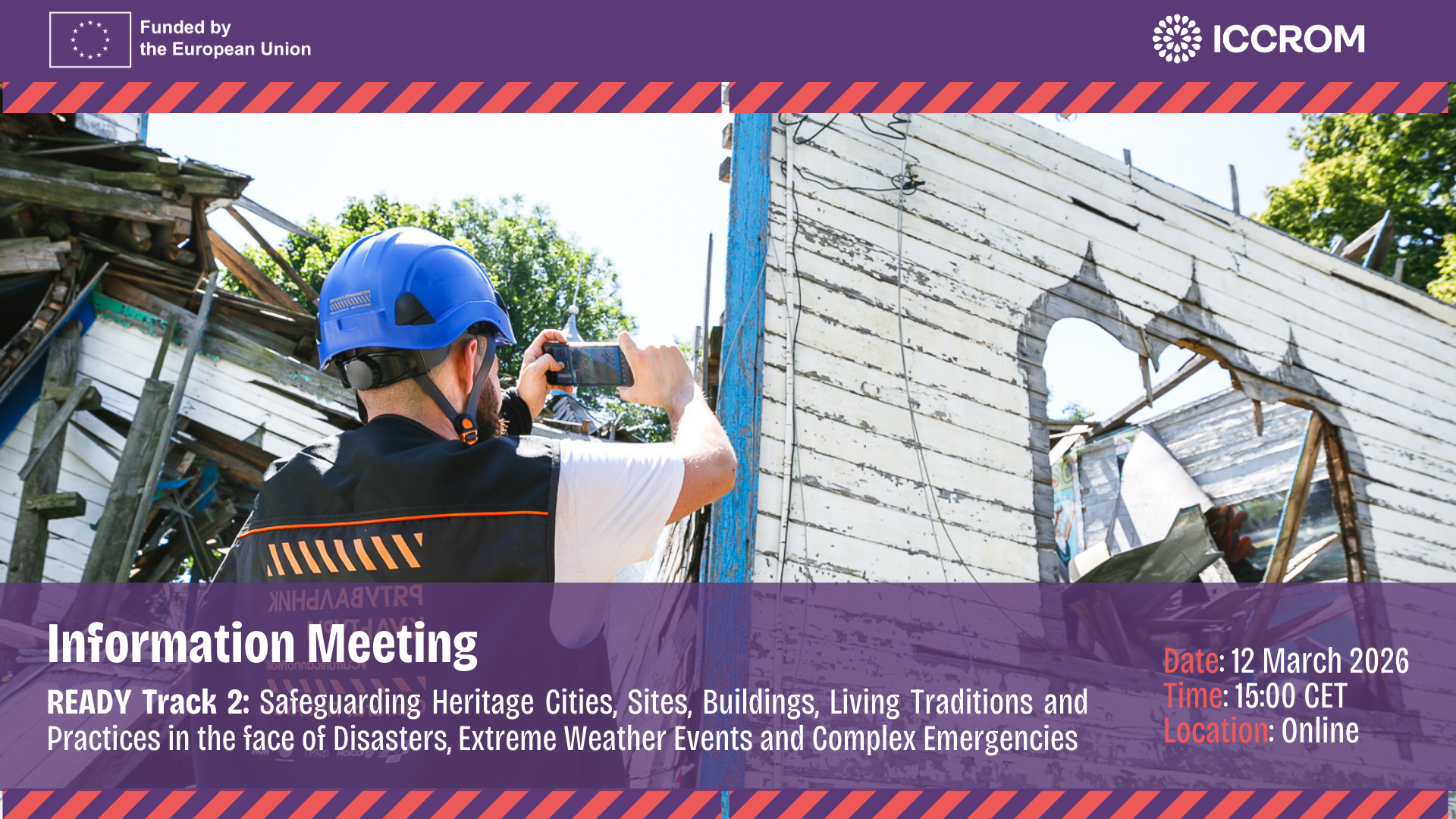
READY Track 2- Safeguarding Cultural Heritage in Times of Crisis – Information Meeting

READYSafeguarding Heritage Cities, Sites, Buildings, Living Traditions and Practices in the face of Disasters, Extreme Weather Events and Complex Emergencies is an international training initiative developed by ICCROM within its First Aid and Resilience for Cultural Heritage in Times of Crisis (FAR) programme, in partnership with the European Commission and funded by the European Union through the Creative Europe Programme.

The programme aims to strengthen capacities across Europe to protect cultural heritage and associated living traditions from disasters, climate-related risks, and complex emergencies.

Following the successful first year of training, which brought together 24 risk managers and cultural first aiders from 19 countries, ICCROM is now launching READY Track 2, a new immersive training focused on safeguarding immovable, archaeological, and intangible cultural heritage from 18 May 2026 to 26 Feb 2027 in Romania (TBC).

Join us to discover how READY Track 2 can strengthen your capacity to manage risks to heritage cities, sites, buildings, and living traditions — and how you can become part of the next European cohort of risk managers and cultural first aiders.

Information Meeting12 March 2026 15:00–16:00 CET

Visit the ICCROM website for more information

Online (Zoom)

Register here

APPLY BY THE LATEST: 31 MARCH 2026

The definition of medicane published in the American Meteorological Society glossary

The occurrence of cyclones with tropical-like characteristics in the Mediterranean has long been known. However, the term “medicane” (Mediterranean tropical-like cyclone) has been used inconsistently in the scientific literature, causing confusion both in the scientific community and in meteorological services. To address this ambiguity, some scientists have proposed a phenomenological definition based exclusively on remote sensing observations, yet consistent with a structural definition based on numerical data. The definition, coordinated by researchers at CNR-ISAC, was published in the Bulletin of the American Meteorological Society (https://doi.org/10.1175/BAMS-D-24-0289.1) and has now been accepted into the American Meteorological Society glossary, thus becoming a reference for those working in the field of meteorology: https://glossary.ametsoc.org/wiki/Medicane. This work was made possible thanks to some important international projects, in which CNR-ISAC played a key role, such as the COST action “Medcyclones” (https://www.cost.eu/actions/CA19109/) and the ESA-funded project “Earth Observations as a cornerstone to the understanding and prediction of tropical-like cyclone risk in the Mediterranean (MEDICANES)”.

Incendi estremi dell’estate 2025: uno studio rivela i fattori scatenanti

Uno studio internazionale a cui ha partecipato, per l’Italia, il CNR-ISAC e CNR-IGG, ha analizzato le cause degli incendi record registrati in Europa occidentale, e in particolare nel nord-ovest iberico, nell’agosto del 2025, individuando nel cambiamento climatico e nell’evoluzione del paesaggio forestale i due fattori che aumentano la frequenza e intensità di tali eventi estremi.
L’articolo è pubblicato su Global Change Biology

E’ stata la combinazione di condizioni meteorologiche estreme e di una vegetazione particolarmente predisposta alla combustione l’origine del record storico di superficie bruciata durante gli incendi che hanno colpito il Nord-Ovest della Penisola Iberica nell’agosto 2025.

Lo studio pubblicato su Global Change Biology nel formato Science behind the news,  è stato guidato dal Gruppo di Modellistica Atmosferica Regionale (MAR) dell’Università spagnola della Murcia, e ha visto la partecipazione, oltre che del CNR, di istituzioni dalla Spagna e dal Belgio.

La ricerca mostra che gli incendi non sono stati un evento isolato, ma si sono sviluppati in concomitanza con un’ondata di calore eccezionale durata 16 giorni nell’Europa sud-occidentale, che ha favorito condizioni meteorologiche estreme per la propagazione del fuoco. Tali condizioni si sono riflesse nell’aumento dell’Indice di Pericolo di Incendio, che ha raggiunto il valore mensile più elevato mai registrato nel Nord-Ovest della Penisola Iberica nel periodo 1985–2025.

L’area interessata dagli incendi, pur rappresentando il 2% del territorio europeo, ha concentrato oltre il 50% della superficie totale percorsa dal fuoco in Europa fino alla fine di agosto, comprendendo circa 541.000 ettari su un totale di un milione complessivamente danneggiati dal fuoco. Emerge tuttavia che le condizioni meteorologiche estreme rilevate, pur essendo un fattore determinante, non spiegano da sole l’entità degli incendi.

Inoltre, non sono state riscontrate evidenze di una maggiore presenza e impatto degli incendi sulle aree protette: la superficie bruciata all’interno di questi spazi risulta, infatti, coerente con la loro estensione relativa sul territorio. Le fiamme hanno piuttosto colpito in modo sproporzionato le aree a macchia e arbusteto, che hanno bruciato in percentuali molto superiori alle attese: questo squilibrio suggerisce un aumento dell’estensione di questo tipo di vegetazione, probabilmente legato a decenni di abbandono del territorio, comune a tutto il Mediterraneo europeo, e a una gestione forestale inefficace.

“È necessario passare da una strategia prevalentemente reattiva di soppressione degli incendi a una prevenzione proattiva, che consideri la resilienza agli incendi come una priorità di sicurezza nazionale”, sottolinea Mara Baudena, CNR-ISAC di Torino.

“Una gestione integrata del territorio, che riduca il carico di combustibile e rafforzi la presenza attiva  e consapevole delle comunità locali, insieme al monitoraggio satellitare e alla capacità di intervento rapido, sono oggi fra le misure più efficaci per limitare gli impatti futuri”, conclude Antonello Provenzale, CNR-IGG.

Nota stampa CNR – https://www.cnr.it/en/press-note/n-14124/incendi-estremi-dell-estate-2025-uno-studio-rivela-i-fattori-scatenanti

Sánchez-Hernández, G., M. Turco, I. Repeto-Deudero, et al. (2025). Record-Breaking 2025 European Wildfires Concentrated in Northwest Iberia. Global Change Biology http://dx.doi.org/10.1111/gcb.70649

Systematic Benchmarking of Climate Models: Methodologies, Applications, and New Directions

The paper “Systematic Benchmarking of Climate Models: Methodologies, Applications, and New Directions,” to which our colleague Valerio Lembo of CNR-ISAC contributed, was published on the American Geosciences Union’s journal Reviews of Geophysics. 

This work is part of the activities of the CMIP7 Model Benchmarking Task Team, which aims to define a standardized protocol for the analysis of climate simulations that will be used in the next IPCC assessment report.

Global and regional climate models are becoming increasingly advanced and complex. The observational data used to evaluate the ability of models to reproduce a realistic climate are becoming increasingly diverse and available over longer time intervals. The increasing complexity of climate models and the diversification and extension of observational data make the comparison between the former and the latter an increasingly complex task. 

Analytical or diagnostic methods have been developed to evaluate and compare model data both in the presence and absence of observations. These diagnostics have highlighted numerous improvements in the ability of the current generation of models to reproduce the current climate, but some issues remain where model results and observations do not agree adequately.

This paper describes the characteristics of some of the packages provided freely by scientists to the global community to quantify the disagreement between models and observations. Good practices on how to interpret the results obtained are discussed, and it is explained why the choice of observations and the selection of appropriate diagnostics are fundamental to making correct assessments.

Link https://doi.org/10.1029/2025RG000891Digital Object Identifier (DOI)
Picture 10.5281/zenodo.13934005 (Lembo et al. 2024)

Progetto TOX-IN-AIR – servizio RaiNews

Un servizio RAI racconta i risultati di TOX-IN-AIR, progetto del CNR-ISAC di Lecce dedicato allo studio della tossicità del PM2.5 nell’area leccese, con un livello di dettaglio senza precedenti per la Regione.

Sono state realizzate non solo misurazioni delle concentrazioni di particolato fine, ma analisi approfondite della composizione e degli effetti tossicologici, per comprendere meglio i potenziali impatti sulla salute.

Il progetto è finanziato nell’ambito di NextGenerationEU attraverso il PRIN2022-PNRR.

Leggi e vedi il servizio su RaiNews Puglia

Ambiente e Società. Quale pianeta per le future generazioni?

I cambiamenti ambientali prodotti dall’attività umana hanno ormai raggiunto un livello tale da mettere a rischio la disponibilità e la fruibilità delle risorse naturali per le generazioni future. In questo contesto si inserisce il volume Ambiente e Società, pubblicato in occasione del centenario della fondazione dell’Istituto della Enciclopedia Italiana Treccani.

Il volume è articolato in tre sezioni. La prima è dedicata alle tipologie di ambiente e analizza i principali ecosistemi, con particolare attenzione a terra, acqua e suolo. La seconda affronta le emergenze ambientali, approfondendo temi cruciali come la qualità dell’aria, la riduzione dell’ozono stratosferico, il cambiamento climatico, la perdita di biodiversità e l’inquinamento da materiali plastici. La terza sezione esamina infine le risposte della società alle sfide ambientali, analizzando l’aumento dell’impronta ecologica attraverso prospettive demografiche, etiche, economiche, sanitarie e giuridiche.

I tredici contributi che compongono il volume sono firmati da esperti italiani. Tra questi figurano due ricercatori dell’ISAC-CNR, Francesco Cairo, Dirigente di Ricerca, e Sandro Fuzzi, Associato Emerito.

Per il CNR ha inoltre contribuito Carlo Calfapietra, Direttore dell’IRET-CNR, mentre la curatela del volume, assieme a Paola Bonfante, è affidata a Guido Carli, Associato dell’IFAC-CNR.

Giovedì 15 gennaio alle 17.30 ci sarà una presentazione del volume presso la sala Igea dell’Istituto dell’Enciclopedia Italiana Treccani, in Piazza dell’Enciclopedia Italiana n. 4, Roma.

Qui il link per partecipare

Cordoglio per la scomparsa di Luigi Nicolais

ISAC si unisce al cordoglio di tutta la comunità CNR per la scomparsa di Luigi Nicolais, Presidente del CNR dal 2012 al 2016.

Qui Nota stampa CNR

Traffic and PM10 in Veneto region: the lesson of the 2020 lockdown

The COVID-19 lockdown in 2020 presented a unique opportunity to assess how traffic can influence air pollution.
In this article just published in Atmospheric Research https://www.sciencedirect.com/science/article/abs/pii/S016980952600030X
the authors demonstrate that in the Veneto region, a 40% reduction in traffic led to an observed reduction in PM10 concentration of up to 30%.
To understand whether the specific atmospheric conditions of the period influenced the release of PM10 concentrations, meteorological data from ground-based stations and radiosondes, along with ERA5 reanalysis data, were analyzed to better define the role of meteorology in reducing pollution concentrations. The analysis does not identify significant changes in meteorological conditions.
The improvement in PM10 concentrations during the lockdown period highlights the potential benefits of traffic reduction in achieving air quality objectives. Unfortunately, current strategic plans are insufficient, highlighting the urgent need for significant changes in traffic management strategies in the region.