Cafca - Atmospheric composition, climate forcing and air quality
Coordinator: Stefano Decesari
Board: Elisa Castelli – Umberto Rizza
The macroarea CAFCA (Atmospheric composition, climate forcing and air quality) has the focus of studying atmospheric composition, with particular attention to gaseous and aerosol compounds that exert a climate forcing effect and/or are relevant to air quality and health. Advanced experimental and modelling tools are employed to investigate the sources, dispersion, and transformations of aerosols and gases (including water vapor) in the atmosphere, spanning the Planetary Boundary Layer (PBL) to the upper atmosphere, and covering scales from local to global.
Research topics
- Aerosol-cloud-radiation interaction
- Observations and modelling of atmospheric composition changes
- Characterisation of trends of natural and anthropogenic sources of pollutants
- Investigation of new pollutants of emerging concern
- Atmospheric composition in hotspot areas
- Planetary atmospheres
- Scientific/support studies, algorithm development and data exploitation for past, present, future and candidate satellite missions.
- Cal/Val: scientific aspects of development of methodologies; source of sustainability for some observation realities.
Activities
Aerosol-cloud-radiation interactions
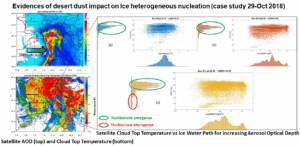
Uncertainty about climate impacts of natural and human-made emissions stems from the complexity of aerosol effects on radiation and precipitation patterns through cloud formation. ISAC contributes to international research efforts to reduce this uncertainty by studying microphysical cloud droplet activation and various cloud regimes, from fog to cyclones. Research focuses on natural and anthropogenic aerosol sources acting as cloud condensation nuclei (CCN) and ice nuclei (IN). The interactions between aerosol scattering, absorption, and radiation are explored, emphasizing the role of black/brown carbon and mineral dust in pollution, biomass burning, and desert dust events in regions like the Mediterranean, Arctic, and Central Asia.


Observations and modelling of atmospheric composition changes
Understanding how natural and anthropogenic sources determine the spatial and temporal variabilities of atmospheric composition is relevant to evaluate co-benefits and trade-offs between air quality remediation actions and measures to limit emission of greenhouse gases and short-lived climate forcers. The research in ISAC on this vast topic is based on the integration of observational and modeling techniques.
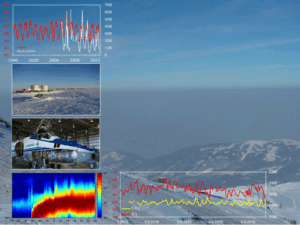
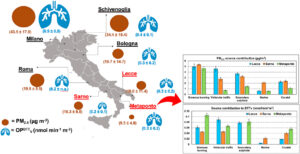
Long-term continuous observations of reactive and greenhouse gases, atmospheric aerosol chemical and physical properties, pollutants of emerging concern, and short-lived climate forcers are performed by a network of ISAC atmospheric observatories. The Institute has experience in using advanced source apportionment approaches combining numerical transport models with receptor models to investigate the contribution of specific sources (natural and anthropic) to the composition of atmosphere and to the toxicity of particulate matter in rural and densely populated areas.
ISAC develops and applies various models, including eulerian and lagrangian approaches, to study atmospheric composition at local to global scales. The GLOBO-BOLAM-MOLOCH meteorological chain provides data for atmospheric models like CHIMERE and dispersion models such as SPRAY and FLEXPART. ISAC is also developing the COAWST-Chem Regional Earth System Model, which integrates WRF-Chem, Gocart, and ROMS/SWAN to examine interactions between atmospheric composition, aerosols, and sea dynamics. This high-resolution model aims to explore climate processes in regions like the Mediterranean and Arctic, focusing on trace gases, aerosols, and their impact on regional climate and atmospheric processes.

Atmospheric composition in hotspot areas
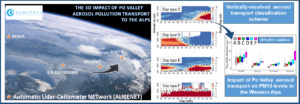
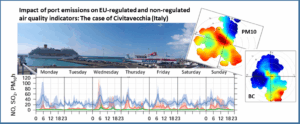
Current research on air pollution and climate focuses on particular regions considered to be the most vulnerable to global change, that are called “hotspots”. These areas encompass pollution hotspots with high levels of toxic compounds (PM, NOx, ozone) and climate-warming agents (ozone and black carbon) as well as background regions where positive feedbacks between atmospheric warming and ecosystem lead to an amplification of the climate change. For these reasons, polar and mountain regions, as well as megacities and large urban complexes are among the priority research areas. In this context ISAC research is dedicated to the characterization of the chemical-physical composition of the Earth’s atmosphere at various time scales and to the study of dynamic and radiative processes based on observational activities carried out at specific hotspot areas, such as high-altitude sites, polar environments, the Mediterranean basin and urban areas therein.
Planetary Atmospheres
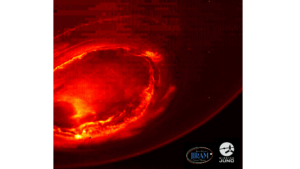
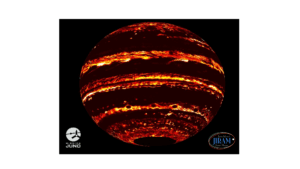
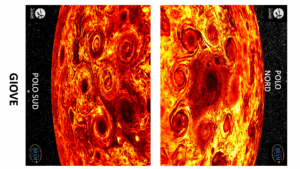
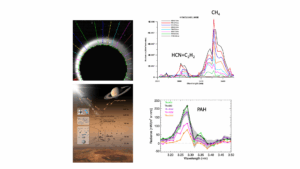
A key scientific question is how Earth and the solar system formed, which requires studying not only Earth but also other planets. ISAC has contributed to this research by studying the atmospheres of Titan (a moon of Saturn) and Jupiter. Titan’s atmosphere resembles what is thought to be the primordial Earth atmosphere, while understanding Jupiter’s composition can provide insights into solar system formation. ISAC is involved in analysing data from the VIMS instrument on the Cassini mission and the JIRAM instrument on NASA’s Juno spacecraft. The institute also develops tools for analysing Mars datasets, such as those from ExoMars TGO. Notable ISAC discoveries include identifying polycyclic aromatic hydrocarbons (PAHs) in Titan’s mesosphere, observing cyclones at Jupiter’s poles, and capturing detailed images of Jupiter’s aurorae. Juno will continue to provide valuable data on Jupiter for years to come.
Satellite Observations
Over the past 30 years, many satellites have been developed to observe and monitor Earth’s atmospheric composition, providing global data from the boundary layer to the stratosphere. These satellite instruments complement ground-based observations and also enable the study of other planets in the solar system. ISAC, a key player in satellite research, is involved in the FORUM mission, which will measure the far-infrared part of the electromagnetic spectrum, specifically Outgoing Longwave Radiation. ISAC is also contributing to the Changing-Atmosphere InfraRed Tomography Explorer (CAIRT) mission, which aims to advance understanding of climate change, atmospheric chemistry, and dynamics. ISAC is working on tools to integrate data from CAIRT and IASI-NG instruments, particularly to analyze ash and ice clouds.
ISAC is heavily involved in analyzing and exploiting atmospheric data from various satellite platforms, developing advanced algorithms for retrieving atmospheric composition data from instruments such as MIPAS, AATSR, and SLSTR. These algorithms serve as prototypes for software used by space agencies like ESA and EUMETSAT to process satellite data. Additionally, ISAC supports planetary studies, such as using data from the Cassini and Juno missions to study Titan and Jupiter’s atmosphere. The algorithms also track the evolution of the Earth’s atmospheric composition, offering insights into trends related to human activity. Through the ESA CCI+ project, ISAC is coordinating the assessment of long-lived greenhouse gas data to evaluate their effectiveness for climate research.

Ground Observations
Continuous monitoring of key atmospheric constituents, complemented by intensive observation periods addressing specific knowledge gaps, are necessary to understand how atmospheric composition is changing in time and space; what are the main sources and processes that are driving these changes, either induced by human activities or linked to natural phenomena, either cause or consequence of climate change.
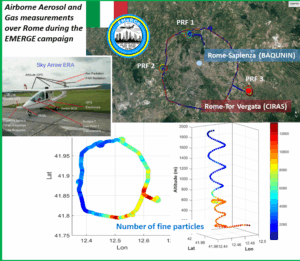
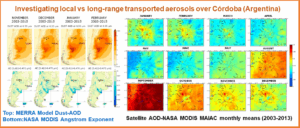
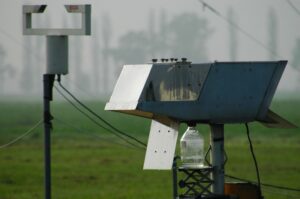
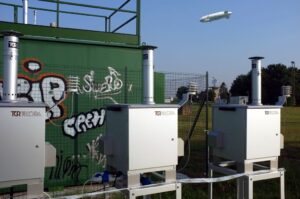
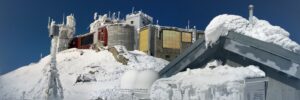
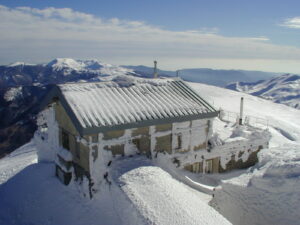
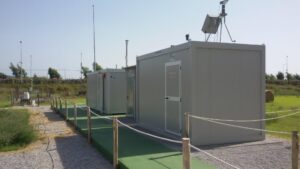
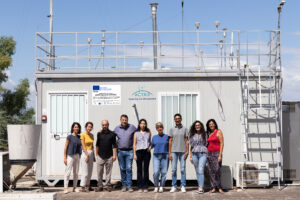
To this purpose, ISAC operates a unique set of observational facilities in Italy and contributes to atmospheric monitoring at national and international research stations around the world. ISAC is responsible for seven atmospheric observatories distributed across the country, at strategic locations for monitoring the atmospheric composition in the Mediterranean area. These facilities include: a global (Mt. Cimone) and three regional (Lecce, Lamezia Terme, Capo Granitola) GAW-WMO stations, plus three atmospheric observatories at rural, suburban and urban locations (San Pietro Capofiume, Roma-Tor Vergata, Bologna). ISAC also runs and coordinates the first national network of ceilometers (Alicenet), contributes to the E-Profile EUMETNET program, and to the European Skynet international network of photometers (EuroSkyrad). ISAC takes part to the European Research Infrastructures for environmental studies, and specifically to “Integrated Carbon Observation System” (ICOS) and “Aerosols, Clouds and Trace Gases” (ACTRIS). In addition, ISAC performs observations in the Arctic and in Antarctica, and for almost a decade has carried out continuous observations at the Mt. Everest (5079 m asl), within the GAW station Nepal Climate Observatory – Pyramid (NCO-P).
ISAC also operates mobile facilities to be deployed during specific field campaigns. These include instrumented vans, balloons, and compact payloads to be operated on board of vessels and/or airplanes. The instrumental set up of these facilities includes in situ and remote sensing techniques for the investigation of the atmospheric thermodynamic structure, aerosol physical and chemical properties, atmospheric greenhouse and reactive trace gases and water in the gas, liquid and solid phase. ISAC is also involved in several satellite calibration/validation activities.

Research projects
- TOX-IN-AIR “evaluation of the role of natural and anthropogenic sources on acellular and in vitro TOXicity INdicators of AtmospherIc aerosol” – PRIN2022-PNRR
- ICOS “Integrated Carbon Observation System”
- ACTRIS “Aerosols, Clouds and Trace Gases”
- FORCeS “Constrained aerosol forcing for improved climate projections” – H2020 LC-CLA-08-2018.
- MAPP “Metrology for Aerosol optical Properties” – EMPIR-EURAMET- H2020.
- “The cryosphere in a changing Arctic: understanding feedbacks to climate change”, ENI-CNR joint research agreement 2019-2024.
- OT4CLIMA “Sviluppo di tecnologie innovative di Osservazione della Terra per lo studio del Cambiamento Climatico e dei suoi impatti su ambiente e territorio” – PON Cluster 2014-2020.
- RHAPS “Redox-activity and Health-effects of Atmospheric Primary and Secondary aerosol” – PRIN 2017.
- DustClim “Dust Storms Assessment for the development of user-oriented Climate Services in Northern Africa, Middle East and Europe” – EC-ERA4CS-H2020 (https://sds-was.aemet.es/projects-research/dustclim)
- InDust “International Network to Encourage the Use of Monitoring and Forecasting Dust Products” – EC-COST
- ATMO-ACCESS “Access to Atmospheric Research Facilities”
- ASI-PRIMARY “PRocessing Images and data for Monitoring AiR qualitY”
- BAQUNIN “Boundary-layer air quality analysis using network of instruments super site”
- ASI-FIT-FORUM, ASI-CASIA, PerRec (CAIRT Phase A Mission Performance and Requirement Consolidation)